

Preventative Medicine by Science
DEXA Body Composition Scans in Barrington, IL
See what the scale cannot show. Full-body DEXA measurement of fat mass, lean muscle mass, visceral fat, and bone density — interpreted by a clinician and used to personalize your wellness plan.
Preventative Medicine by Science offers DEXA body composition scans at our clinician-led wellness clinic in Barrington, IL. Patients from Lake Zurich, Inverness, North Barrington, and across the northwest suburbs choose DEXA as a precise starting point: measure first, then plan with medical guidance and follow-up.
What Is a DEXA Scan?
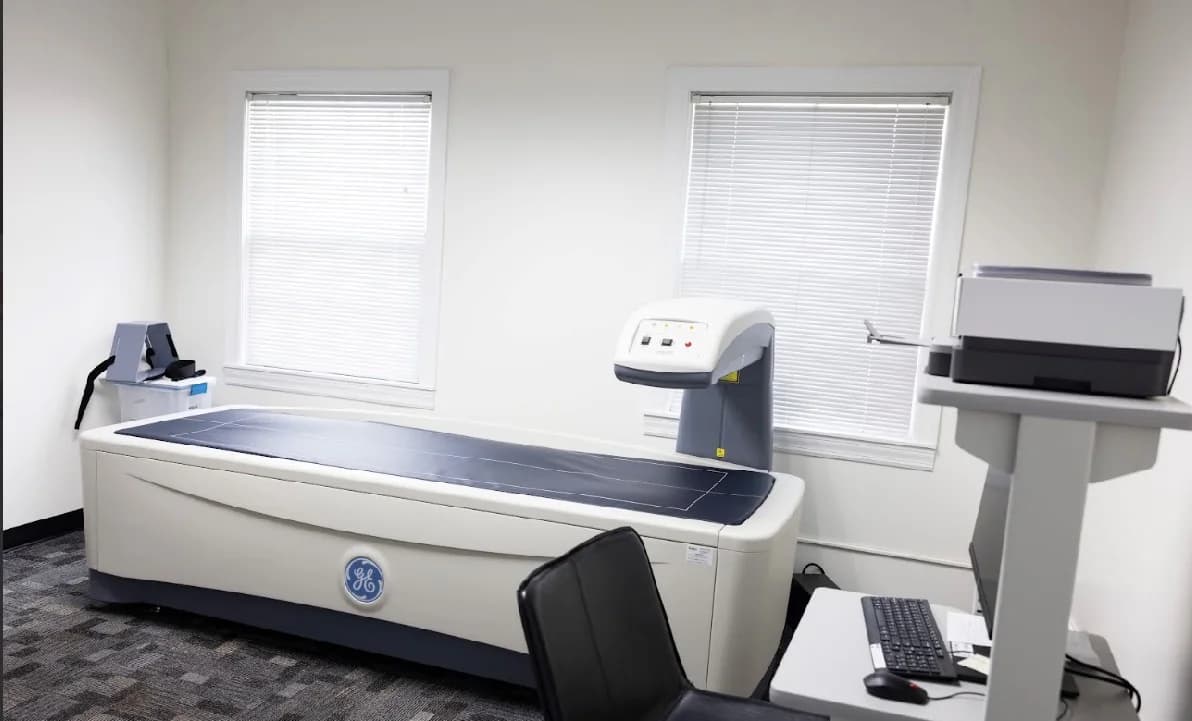
DEXA (Dual-Energy X-ray Absorptiometry), also written as DXA, is a full-body imaging scan that uses low-dose X-rays to distinguish between different tissue types. While DEXA is widely known for bone density assessment, it also provides a detailed picture of body composition — how fat, lean tissue, and bone are distributed throughout the body.
At Preventative Medicine by Science, DEXA is positioned as a measurement tool, not a standalone diagnosis. A clinician reviews scan results in context with your health history and goals, then uses that data to inform a personalized wellness plan. Individual results vary; the value is in having objective numbers to track over time.
What a DEXA Body Composition Scan Measures
A single full-body DEXA scan reports several distinct measurements that a bathroom scale or simple BMI calculation cannot provide on their own.
Fat mass — Total body fat and regional fat distribution, showing where adipose tissue is concentrated across the trunk, arms, and legs.
Lean mass — Muscle and other non-fat lean tissue, useful for tracking changes in muscle mass alongside fat changes over repeat scans.
Visceral fat — Abdominal fat surrounding internal organs (distinct from subcutaneous fat just beneath the skin). DEXA can quantify visceral fat as part of a full-body composition report.
Bone density — Bone mineral content measured across body regions, providing baseline data a clinician may use when evaluating skeletal health.
Together, these measurements give a clinician a structured dataset for personalized planning — whether the focus is general wellness, body composition awareness, or measurement-informed care in other clinic services.
Understanding Visceral Fat
Visceral fat is adipose tissue that accumulates in the abdominal cavity, surrounding organs such as the liver, kidneys, and pancreas. It is distinct from subcutaneous fat — the tissue that can be felt just under the skin.
In medical literature, elevated visceral fat has been associated with chronic inflammation and with increased risk for several chronic health conditions, including insulin resistance, cardiovascular disease, and certain metabolic patterns. Research also links visceral fat to inflammatory pathways that may influence long-term health outcomes.
DEXA is one method used to estimate visceral fat as part of a broader body composition report. Measuring visceral fat does not, by itself, diagnose a disease or predict an individual's future health. A clinician interprets visceral fat results alongside other clinical information when discussing what the numbers may mean for a given patient.
This section is educational. It describes what visceral fat is and why it appears in body composition reporting — not whether any particular person has too much of it.
How a DEXA Scan Works and What to Expect
DEXA scans at our Barrington clinic are performed on-site by appointment. The process is non-invasive and typically straightforward.
During the scan: The patient lies still on a scanning table while the DEXA device passes low-dose X-ray beams across the body. The appointment usually takes about 20 minutes, including time to lie still for image capture. Comfortable clothing without metal components (zippers, underwires, or other hardware) is recommended.
Preparation: For best consistency across repeat scans, patients are generally advised to:
- Avoid barium exams or contrast-dye injections for two weeks before the appointment
- Wear workout-style clothing without metal; at least one layer of clothing over undergarments is required during the scan
- Avoid eating a large meal immediately beforehand
- Maintain normal hydration — neither over-hydrating nor dehydrating before the visit
- Keep conditions similar across repeat scans (for example, fasting status) so that changes in results reflect actual body composition shifts rather than short-term variables
After the scan: Results are reviewed by a clinician who explains what the measurements show and how they may inform next steps — whether that means follow-up scans, wellness planning, or coordination with other clinic services. Scan findings are one input in clinical decision-making; they do not replace a full medical evaluation.
Eligibility: DEXA scans are available to patients who meet general equipment requirements. The scanner accommodates patients up to approximately 300 lb and up to about 6'5" in height. DEXA is not performed during pregnancy. Patients who are unsure about pregnancy status may be asked to confirm before scheduling. The ability to lie still for the duration of the scan is also required.
Who Requests a DEXA Body Composition Scan
DEXA appeals to health-proactive adults who want objective body composition data rather than estimates from weight alone. Common reasons patients request a scan include:
- Establishing a baseline before starting a clinician-guided wellness or weight management plan
- Tracking changes in fat mass, lean mass, and visceral fat over time with repeat measurements
- Gaining a fuller picture of body composition that BMI or scale weight cannot provide
- Beginning care at a measurement-first wellness clinic where scan data informs personalized planning
- Monitoring progress during supervised fitness, nutrition, or medical wellness programs
DEXA is available to adults seeking data-driven insight into their body composition. A consultation helps determine whether a scan fits an individual's goals and how results would be used within the clinic's care model. Preventative Medicine by Science serves patients throughout Barrington, Lake Zurich, Deer Park, Kildeer, Palatine, Cary, Fox River Grove, Crystal Lake, Hoffman Estates, Algonquin, and nearby northwest suburbs.
Questions
DEXA Scan Frequently Asked Questions
What does a DEXA scan measure?
A full-body DEXA scan measures fat mass, lean (muscle) mass, visceral (abdominal) fat, and bone density across body regions. Results are reported as quantitative data that a clinician interprets in the context of your health history and goals.
Is a DEXA scan safe?
Yes. DEXA uses low-dose X-ray imaging and is non-invasive. Radiation exposure is minimal — comparable to the dose received during a short commercial flight. The scan does not involve injections or contrast agents.
How should I prepare for my DEXA scan?
Avoid barium studies or contrast-dye injections for two weeks before your appointment. Wear comfortable clothing without metal (no zippers, underwires, or metal fasteners). At least one layer of clothing over undergarments is required during the scan. Avoid a large meal immediately beforehand, and come at your usual hydration level. For repeat scans, keeping preparation consistent helps ensure that changes in results reflect real shifts in body composition.
How long does a DEXA scan take?
Plan for approximately 20 minutes. Most of that time involves lying still on the scanning table while images are captured.
Who is eligible for a DEXA scan?
The scanner accommodates patients up to approximately 300 lb and up to about 6'5" in height. DEXA is not performed during pregnancy. Patients must be able to lie still for the duration of the scan. Contact the clinic to confirm eligibility and scheduling.
How often should someone get a DEXA scan?
There is no single interval that fits every person. Repeat scan timing depends on clinical goals — such as tracking body composition during a wellness plan or monitoring changes over months. A clinician can recommend an appropriate follow-up schedule based on individual circumstances. Results and needs vary.
What happens after the scan?
A clinician reviews your DEXA results and discusses what the measurements show. Depending on your goals, next steps may include wellness planning, repeat scans at a future date, or coordination with other services at the clinic such as medical weight management or general wellness care. The scan provides measurement data; clinical interpretation and planning are separate steps.
How much does a DEXA scan cost?
Pricing varies and is confirmed when you contact the clinic. Request a consultation or ask about a DEXA scan to receive current information.
What is body composition?
Body composition describes the physical makeup of the body — specifically the proportions of fat, lean tissue, and bone. Unlike body weight alone, body composition data shows how those components are distributed, which can be useful for tracking changes over time.
How is DEXA different from other body composition methods?
Methods such as bioelectrical impedance (BIA) or air-displacement plethysmography estimate body composition using different technologies. DEXA uses low-dose X-rays to directly measure tissue types across the full body, including regional fat distribution, lean mass, visceral fat, and bone density in a single scan. A clinician can explain which measurement approach best fits a given situation. ---
Related care
- Medical Weight Loss Program and NutritionMedical weight management, GLP-1 education, and nutrition counseling.
- Hormone CareEvaluation-first hormone care for men and women with lab-guided planning.
- Sexual MedicineConfidential clinician-led sexual health evaluation in a discreet medical setting.
Next step
Start With Measurement
A DEXA body composition scan is the entry point to clinician-guided wellness at Preventative Medicine by Science. Get full-body data on fat, lean mass, visceral fat, and bone density — then work with a clinician to build a plan grounded in what the numbers show. Serving Barrington, Lake Zurich, and the northwest suburbs by appointment.